Villebois Castle


Villebois Castle
is located in Charente in the French commune of Villebois-Lavalette. The fortified hill of Villebois is dominated by the ruins of a feudal castle and a wing of an imposing 17th century building. It belonged to Jean-Louis Nogaret de La Valette, Duke of Épernon and Governor of Angoumois.

Historical

The spur position of the castle platform on a hillock, near the boundary between Angoumois and Périgord, dominating Chemin Boisné, an ancient road between Saintes and Périgueux, meant that the site was very early on an important stronghold for the defense of the surroundings.

In the 8th century, the Fulchers of Villebois were its lords. Then in 959, it was the Helies. In 1120 the castle was taken by Vulgrin II Taillefer, Count of Angoulême, and in 1143 it passed to the Ithiers de Villebois, who built the two-storey Romanesque chapel.

The line died out in 1204 with Amélie de Cognac, married to a Philippe de Cognac, illegitimate son of Richard  I. The Villebois estates then passed to Jean-Sans-Terre, then to Jean-Sans-Terre's wife, Isabelle d'Angoulême. His remarriage transferred the seigneuries of the Cognacs and the castle to the Lusignans, counts of Angoulême, who raised their seven semi-circular flanking towers and enlarged the chapel.

In 1355, Raymond de Mareuil, knight, lord of Mareuil and Bourzac, received from King Jean le Bon the lordship of Villebois after the extinction of the Lusignan line. The lords of Mareuil are then among the successive owners of the castle.

During the Hundred Years War, the English held a garrison there. In 1360, during the Treaty of Brétigny retroceding Angoumois to English Guyenne, the English entrusted the custody of the castle to its owner, Raymond de Mareuil. In 1376, Villebois was taken back from the English by the Duke of Berry, brother of Charles V.

Guy de Mareuil, baron de Mareuil and de Villebois, seigneur of Bourzac, Angeac, Vibrac, Montmoreau and Pranzac, was seneschal of Angoumois. Died in 1519, he is buried in the chapel of the convent of the Augustins which he had founded in Villebois.

In 1541, the château returned with the incredible marriage of his daughter, Gabrielle de Mareuil, to Nicolas d'Anjou, Marquis de Mézières en Berry. In 1556, Renée d'Anjou-Mézières married the very Catholic François de Bourbon, Duke of Montpensier, and brought him as a dowry her lands of Vibrac, Villebois and Mareuil.

During the Wars of Religion Villebois will be largely destroyed. Indeed, between 1568 and 1569, the castle was taken and taken over by Catholics and Protestants. In 1590, Jean-Louis de Nogaret de La Valette, Duke of Épernon and governor of Angoumois from 1588, laid siege to the castle where members of the League, headed by a certain Maumont, appointed by the "knight d' Aubeterre”, David Bouchard, had entrenched themselves. He broke through the wall with intense cannon fire, and hanged eighteen leaguers.

A few years later, in 1596, the Duke of Épernon acquired from its owner, the Marquise de Mézières, the land of Villebois as a fief and had it set up, in 1622 by letters patent, the marquisate as a duchy and peerage of Lavalette, d 'where the current name of Villebois-Lavalette. The castle became the Duke's main secondary residence, after Angoulême.

Angkor Thom


 Royal ballet dance at Bayon temple 

Angkor Thom Cambodia 

Jaswant Thada


Jaswant Thada
, Jodhpur, Rajasthan.

Chogha Zanbil Ziggurat

Chogha Zanbil Ziggurat

•Chogha Zanbil is an ancient Elamite complex built in Khuzestan Province-Iran, about 1250 BCE.

•It was built for worshipping gods and mainly to honour the great god Inshushinak.

•The ziggurat now stands only 24.75 metres (81.2 ft) high, less than half its estimated original height, its state of preservation is unsurpassed.

•The main building material used in Chogha Zanbil is mud bricks and occasionally baked bricks.

•The monuments were decorated with glazed baked bricks, gypsum, and ornaments of faïence and glass.

•The Chogha Zanbil Ziggurat became the first Iranian site to be registered on the UNESCO World Heritage List.

The ziggurat is considered to be the best-preserved example of a stepped pyramidal monument by UNESCO.

•Petroleum exploration due to increased global demand threatens the foundations of the site.

•Digging for oil has been undertaken as close as 300 metres (984 ft) away from the ziggurat.

👉Follow me Ancient Scientist  to enjoy more and more posts about our world's marvelous History.❤

Hohensalzburg Castle, Salzburg, Austria


Hohensalzburg Castle
, Salzburg, Austria

Będzin Castle, Poland


Będzin Castle, Poland 

Terrace farming, China


 Terrace farming, China

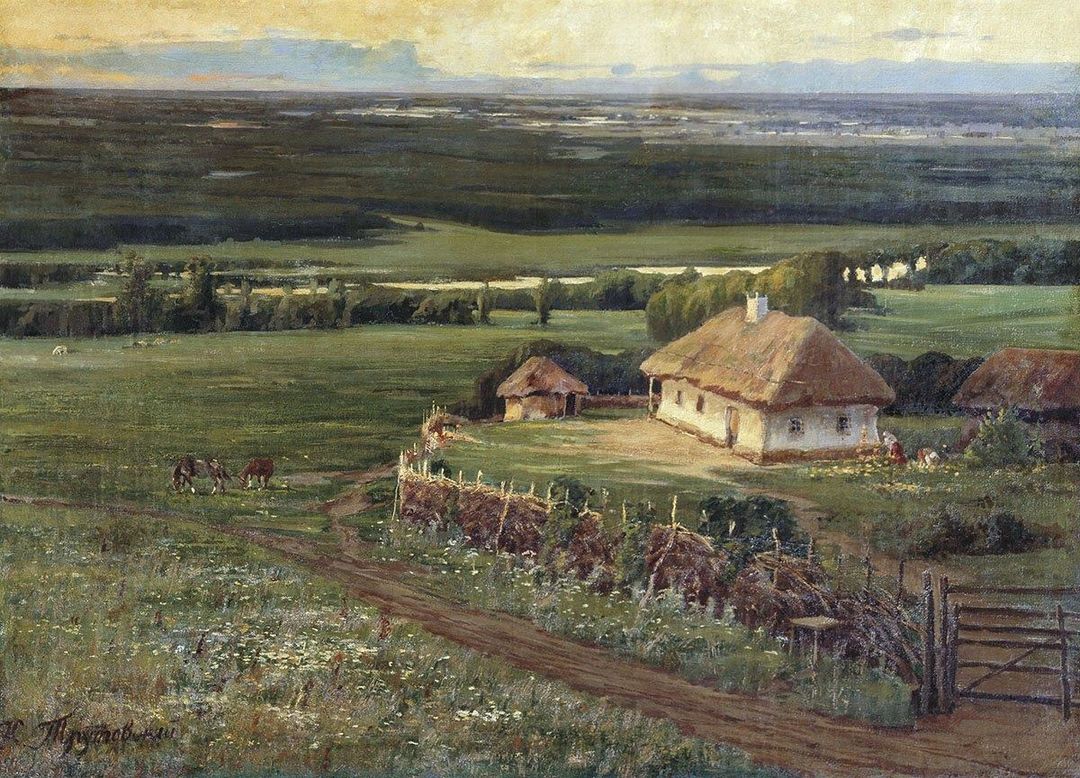
Український краєвид


 Костянтин Трутовський.  Український краєвид. Друга половина 19 століття

Olavinlinna Castle, Finland

  Nestled in the heart of Finland, Olavinlinna Castle stands as a timeless testament to history and architectural marvel. Its robust stone walls tell stories of battles fought and alliances forged, while its towers reach for the sky, offering breathtaking views of the surrounding landscape. Visitors are transported through time as they explore the intricate chambers, winding staircases, and secret passageways that whisper of bygone eras. With its picturesque setting on the shores of Lake Saimaa, Olavinlinna Castle remains a captivating destination that bridges the gap between past and present.

Стены Хаттусы


 Стены Хаттусы.

Они очень монументальны. Общая протяженность внешних стен хеттской столицы — 6 километров. Основания стен были каменными, они сохранились до наших дней, а выше возводили непосредственно стену из сырцового кирпича.

Sanctuary of Hercules Victor, Tivoli, Italy


Sanctuary of Hercules Victor
, Tivoli, Italy. Artwork by Inklink Firenze.

Alhambra, Granada, Spain


 Alhambra, Granada, Spain

Rio de Janeiro, Brazil


Rio de Janeiro
, Brazil

Temple of Caesar in Rome


 On August 18, 29 BCE, the Temple of Caesar in Rome was consecrated. It was the first deification of a ruler in the history of Rome. The building suffered heavily over the centuries. Only the podium and fragments of architectural decorations have survived. In front of the temple, in a semicircle, stood the altar on which Caesar was cremated.

  Actually, the Temple of the Divine Julius (Latin: Aedes Divus Iulius, Templum Divi Iulii) was a temple dedicated to Julius Caesar, recognized as a god by the Roman Senate. The temple was located in the Roman Forum between the Regia, the Castor Temple and the Emilian Basilica.

Bellver Castle, of Palma on the Island of Majorca, Balearic Islands, Spain


Bellver Castle is a Gothic-style castle on a hill 3 km to the west of the center of Palma on the Island of Majorca, Balearic Islands, Spain. It was built in the 14th century for King James II of Majorca, and is one of the few circular castles in Europe

First serving as the residence of the Kings of Majorca, and afterward long used as a military prison throughout the 18th to mid-20th century, it is now under civilian control, being one of the main tourist attractions of the island, as well as the seat for the city's History Museum.

Церква Різдва пр. Богородиці (1778 р.)


Івано-Франківська область, Тисменицький р-н., селище Єзупіль, на світлині 1900-х рр. величава дер. церква Різдва пр. Богородиці (1778 р.). Згоріла під час першої світової війни.

Castle of Coca, Central Spain


Castle of Coca
,  Central Spain

Популярные сообщения